Are your students tired of completing the same fill-in-the-blank math review worksheets? Mine were too—and honestly, so was I! That is why I began using math escape rooms in my classroom.
Math escape rooms turn ordinary review problems into an exciting challenge. Instead of simply completing another worksheet, students solve math problems, uncover clues, and work toward a final code. They remain engaged while practicing important skills—and they may not even realize how much math they are reviewing!
If you are looking for a classroom activity that combines meaningful math practice with problem-solving and teamwork, here is everything you need to know about using math escape rooms.

Want a FREE escape room? Check out the sidebar—or scroll below on mobile—to get yours!
What Is a Math Escape Room?
A math escape room is a themed activity in which students solve a series of math challenges to discover clues or codes. Their goal is usually to “escape” a fictional room, solve a mystery, complete a mission, or unlock a final answer.
Unlike a physical escape room, students do not need to be locked inside an actual room. The excitement comes from the story, puzzles, challenges, and final goal.
Math escape rooms can be:
- Designed as timed challenges or untimed review activities
- Printed and completed on paper
- Presented digitally using Google Forms
- Completed individually, with a partner, or in teams
- Used with middle school, Algebra, Geometry, or other math content
How Escape Rooms Work
Most math escape rooms include several sections or challenges. Students solve the math problems in each section and use their answers to uncover a code, clue, word, or phrase.
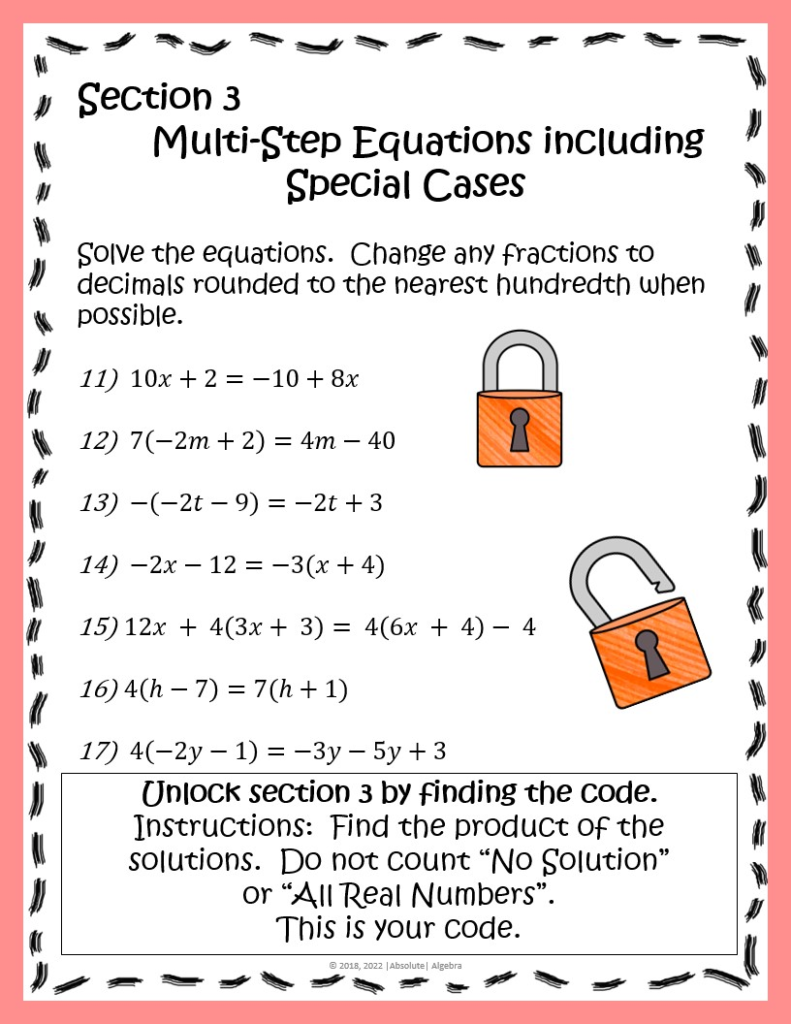
For example, after solving a group of equations, students may answer a question such as, “How many graphs have negative slopes?” That number becomes part of the final code.
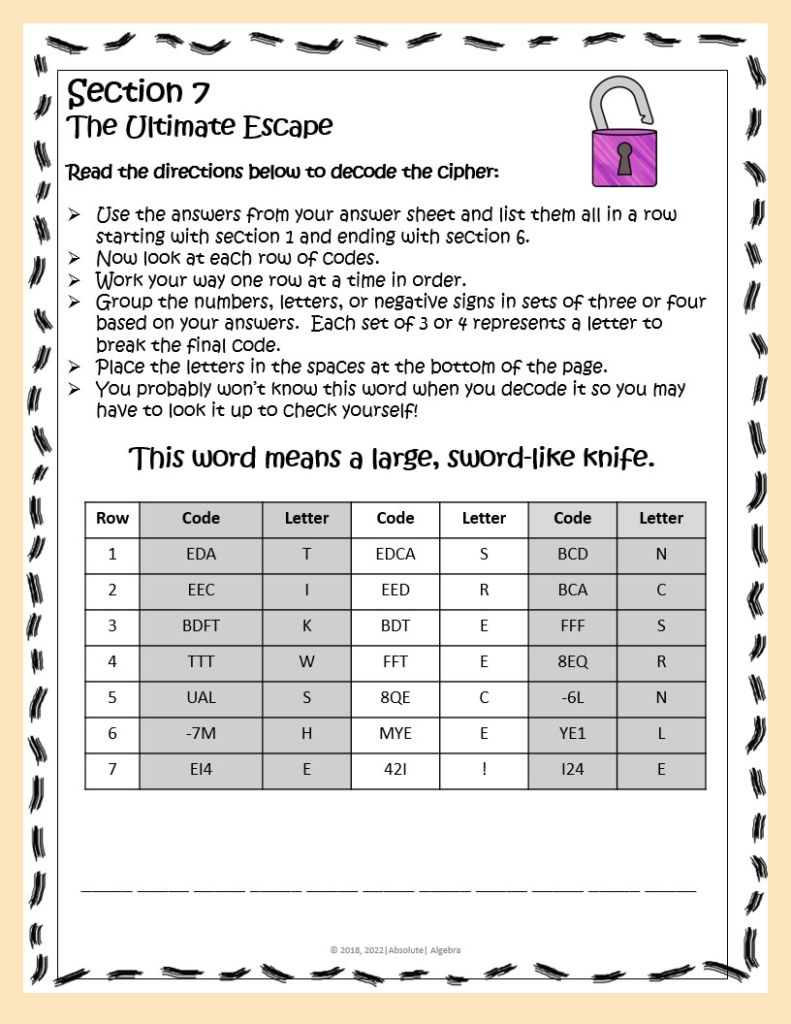
As students complete each section, they collect additional clues. These clues eventually lead them to a final challenge, secret message, or escape code.
The activity feels like a game, but students are still completing meaningful math practice throughout the entire experience.
Benefits of Using Math Escape Rooms
I have found that math escape rooms provide benefits that go far beyond a standard review worksheet.
Increase Student Engagement
Math escape rooms give students a reason to keep working. They are not simply completing problems because they have been assigned. They are solving problems to uncover the next clue and move closer to completing a mission.
The mystery and anticipation help students stay focused—even when the math is challenging.
Encourage Active Participation
A traditional worksheet makes it easy for students to work slowly, lose focus, or wait for someone else to provide the answers. An escape room creates a greater sense of purpose and urgency.
Students must solve the problems, check their work, and use their answers to complete each challenge. When students work in teams, everyone can contribute to the group’s success.
For even more excitement, you can also add a countdown timer to make the experience more exciting. I have found that this encourages students to remain focused and manage their time carefully.
Build Problem-Solving Skills
Math escape rooms require more than computation. Students must analyze information, recognize patterns, determine how clues fit together, and decide what to try next.
These activities help students practice perseverance. If an answer does not unlock the next step, they must review their work, locate the error, and try again.
Promote Collaboration and Communication
When students complete an escape room with a partner or team, they must communicate clearly and work together.
Students explain their reasoning, compare answers, divide responsibilities, and help one another correct mistakes. These conversations provide valuable opportunities for students to use mathematical language and learn from their classmates.
Connect Math to Other Subjects
One of my favorite benefits of math escape rooms is the opportunity to make cross-curricular connections.
The storyline can incorporate language arts, science, social studies, holidays, or school events. You may even be able to coordinate with other teachers and create related challenges in multiple subjects.
Students are often excited to discover connections between math and their other classes—especially when those connections are part of a mystery or mission.
Make Technology Meaningful
Additionally, digital math escape rooms are an excellent way to use classroom technology with a clear instructional purpose.
Challenges can be created in Google Forms so that students submit answers electronically. This reduces copying and gives students immediate feedback when response validation is used.
Digital escape rooms are also convenient because they can be completed in the classroom, assigned for independent practice, or used during online learning.
When Can You Use Math Escape Rooms?
Math escape rooms are flexible enough to use throughout the school year. They work especially well as:
- Unit review activities
- Test-preparation activities
- End-of-year review
- Beginning-of-year skill review
- Fun Friday activities
- Early-finisher activities
- Team-building activities
- Classroom rewards
- Holiday or seasonal lessons
- Activities for a substitute teacher
You can choose an escape room that reviews a single skill or one that combines several concepts from an entire unit.
How to Make Your Own Math Escape Room
Would you like to create your own classroom escape room? Once you develop a basic structure, you can reuse it with different math skills, grade levels, and themes.
Step 1: Choose the Math Skills
Decide which skills you want students to practice. Your escape room may focus on one topic, such as solving equations, or review several skills from a complete unit.
Step 2: Divide the Problems into Challenges
Separate the questions into several sections. This allows students to complete the activity one challenge at a time instead of facing one long list of problems.
Step 3: Choose a Theme or Mission
Select a setting that will capture your students’ attention. Possibilities include:
- Escape the North Pole
- Escape the Museum
- Solve a school mystery
- Complete a secret mission
- Rescue a missing mascot
- Unlock a hidden treasure
Your story does not need to be complicated. A brief introduction and a clear mission can create plenty of excitement.
Step 4: Create a Code for Each Challenge
After completing a section, students should use their answers to determine a code, word, number, or clue.
For example, you might ask students to count how many solutions are positive, arrange answers from least to greatest, or match answers to letters.
Make sure each code requires students to complete the math. Students should not be able to skip the problems and guess the answer.
Step 5: Design the Final Challenge
The results from the earlier challenges should lead students to one final answer.
Students might combine several numbers into a lock code, arrange letters to form a word, or use their clues to answer a final question. This gives the activity a satisfying conclusion and creates the feeling of completing a mission.
Step 6: Create a Printable or Digital Version
You can print the challenges for students or build the escape room digitally using Google Forms.
When creating a digital escape room, upload each challenge and use response validation when appropriate. Students can enter their answers directly into the form and receive immediate feedback.
Would you like more help creating a digital version? Read my post about creating escape rooms with Google Forms!
Tips for a Successful Classroom Escape Room
A few simple preparations can make your math escape room run more smoothly:
- Complete the activity yourself before assigning it.
- Make sure every code and answer works correctly.
- Decide whether students will work independently, with partners, or in teams.
- Explain whether students may ask for hints.
- Establish expectations for teamwork and classroom volume.
- Provide scratch paper for calculations.
- Consider offering a hint in exchange for a small time penalty.
- Have an extension activity ready for early finishers.
- Allow time at the end to discuss strategies and common mistakes.
Remind students that accuracy is more important than speed. Finishing first is exciting, but solving the math correctly is the real goal.
Ready to Try a Math Escape Room?
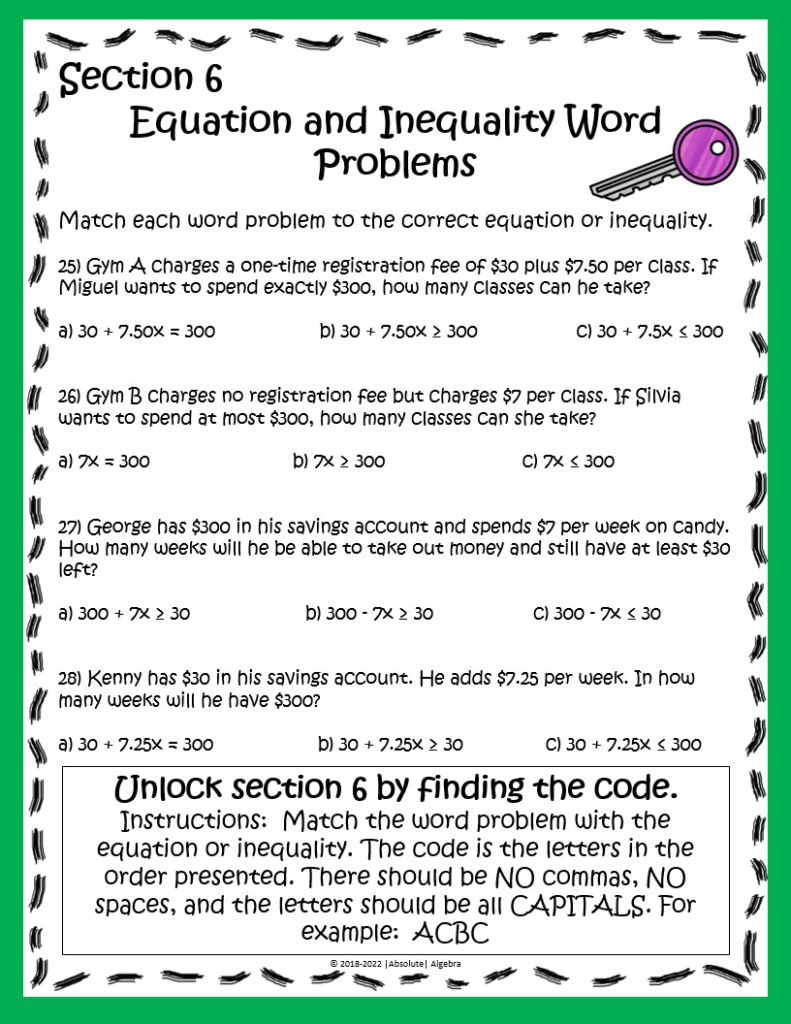
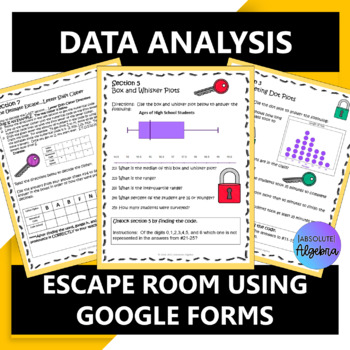
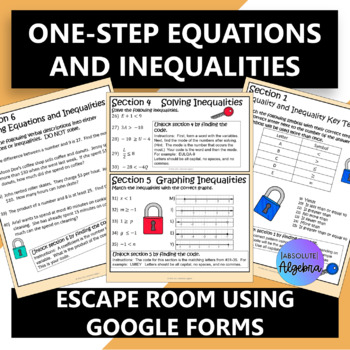
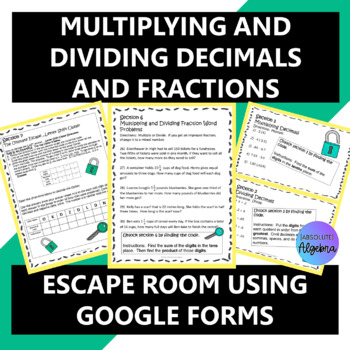
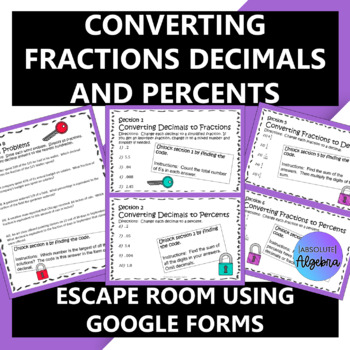
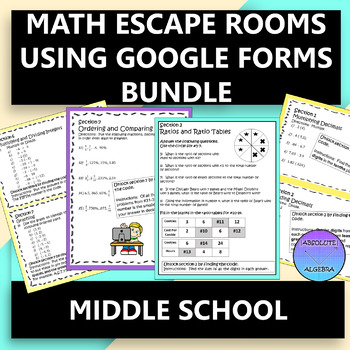
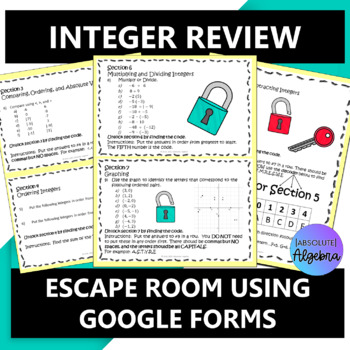
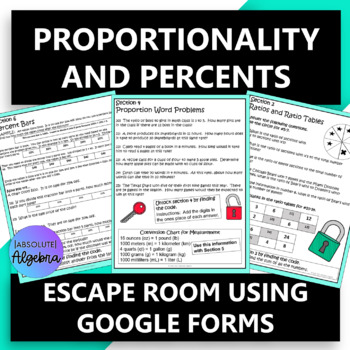
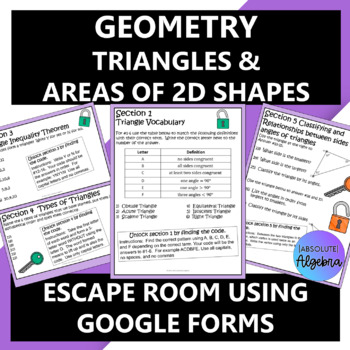
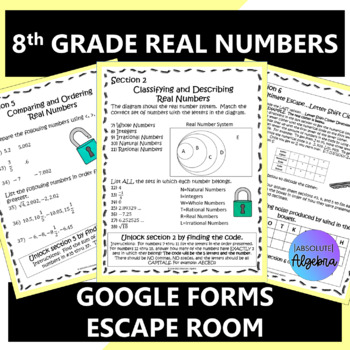
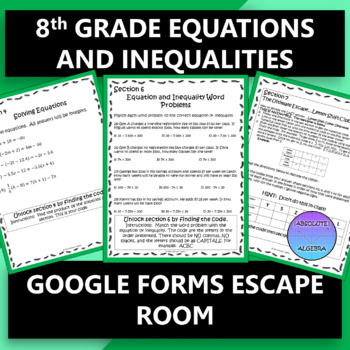
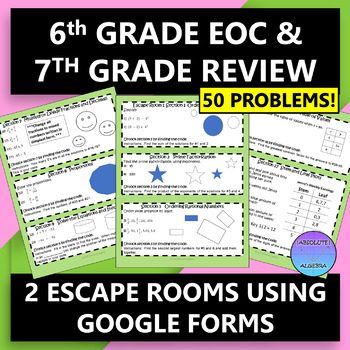
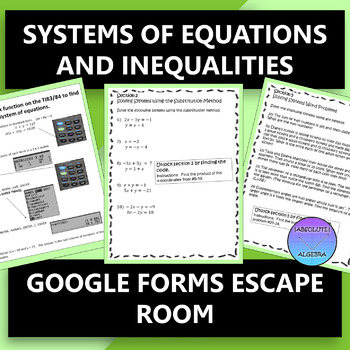
Creating your own escape room can be fun, but it can also take a great deal of planning and preparation. If you would like to save time, I have created ready-to-use middle school and Algebra math escape rooms with the math problems, challenges, and final codes already prepared for you.
Choose the activity that matches the skills your students are learning, and you will have an engaging review lesson ready to go. Click the pictures below to get more information on the escape room.
Middle School Escape Rooms
Not ready to buy? Get a FREE escape room! Check out the sidebar—or scroll below on mobile—to get yours!
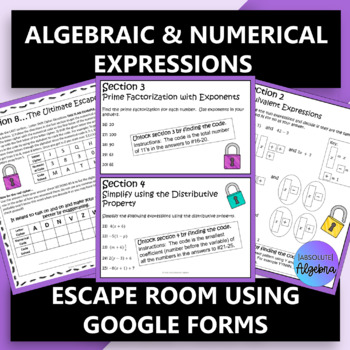
Algebra Escape Rooms
Not ready to buy? Get a FREE escape room! Check out the sidebar—or scroll below on mobile—to get yours!
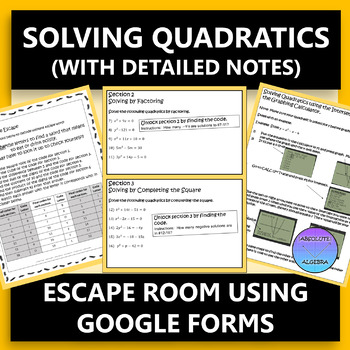
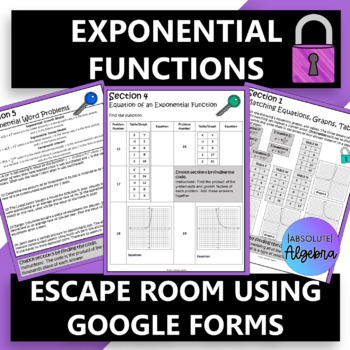
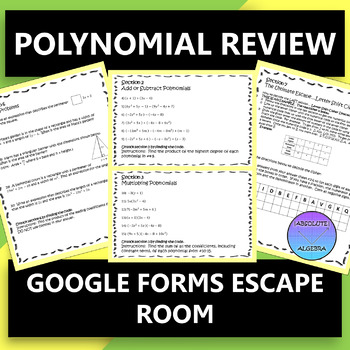
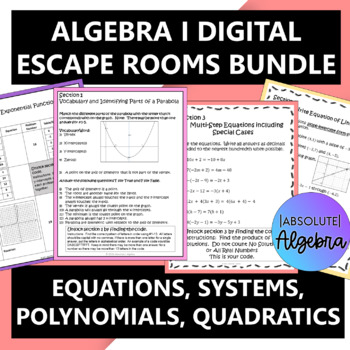
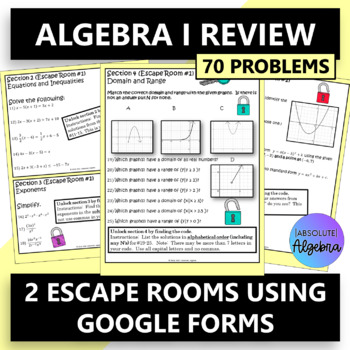
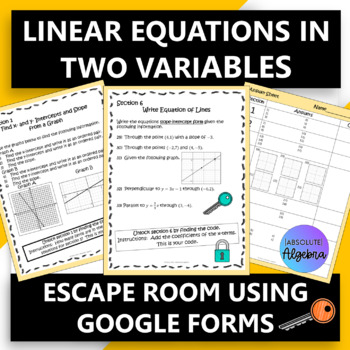
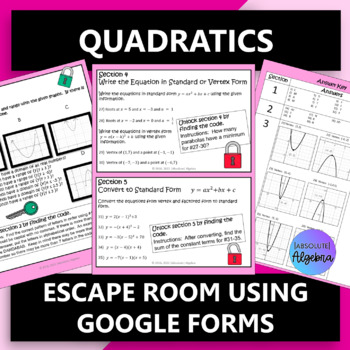
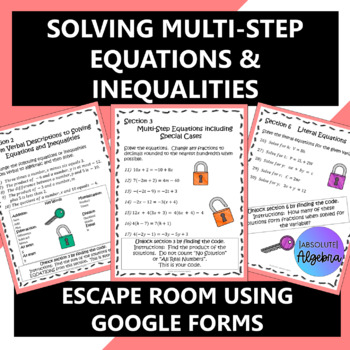
Whether you create your own activity or use a prepared one, math escape rooms can transform an ordinary review day into a memorable classroom experience. Students practice essential math skills while solving problems, communicating, and working toward a shared goal.
Once your students complete their first escape room, do not be surprised if they immediately ask when they can do another one!